Top Poker Builds Every PT Gaming Player Should Know
Choosing the right poker builds is one of the fastest ways to improve your long-term results. The best build isn’t the one that wins every hand—it’s the one that helps you make consistent decisions over hundreds of sessions. On PT Gaming, where every table features different opponents and betting styles, having a clear strategy is more valuable than relying on instinct alone.
What Makes a Good Poker Build?
A poker build is the overall style you follow throughout a session. It influences which starting hands you play, how often you raise, when you bluff, and how you react under pressure. Skilled players rarely make decisions randomly. Instead, they rely on a build that matches both their experience level and the table they’re facing.
Many beginners confuse a poker build with a fixed set of rules. In reality, it’s a framework. Two players using the same build may still make different decisions because stack sizes, table position, and opponent tendencies all affect the correct play.
Why Consistency Beats Constantly Changing Styles
One mistake I often see is players switching strategies after a few losing hands. A tight style suddenly becomes overly aggressive, or a patient player starts calling every raise just to recover losses.
That approach usually creates bigger problems than the original losing streak.
A consistent poker build helps you:
- Make similar decisions in similar situations.
- Recognize mistakes more easily after a session.
- Avoid emotional betting after bad beats.
- Develop patterns that can be refined over time instead of starting from scratch every game.
Even experienced players adjust their strategy gradually rather than abandoning it after one unlucky hand.
Top Poker Builds Every PT Gaming Player Should Know
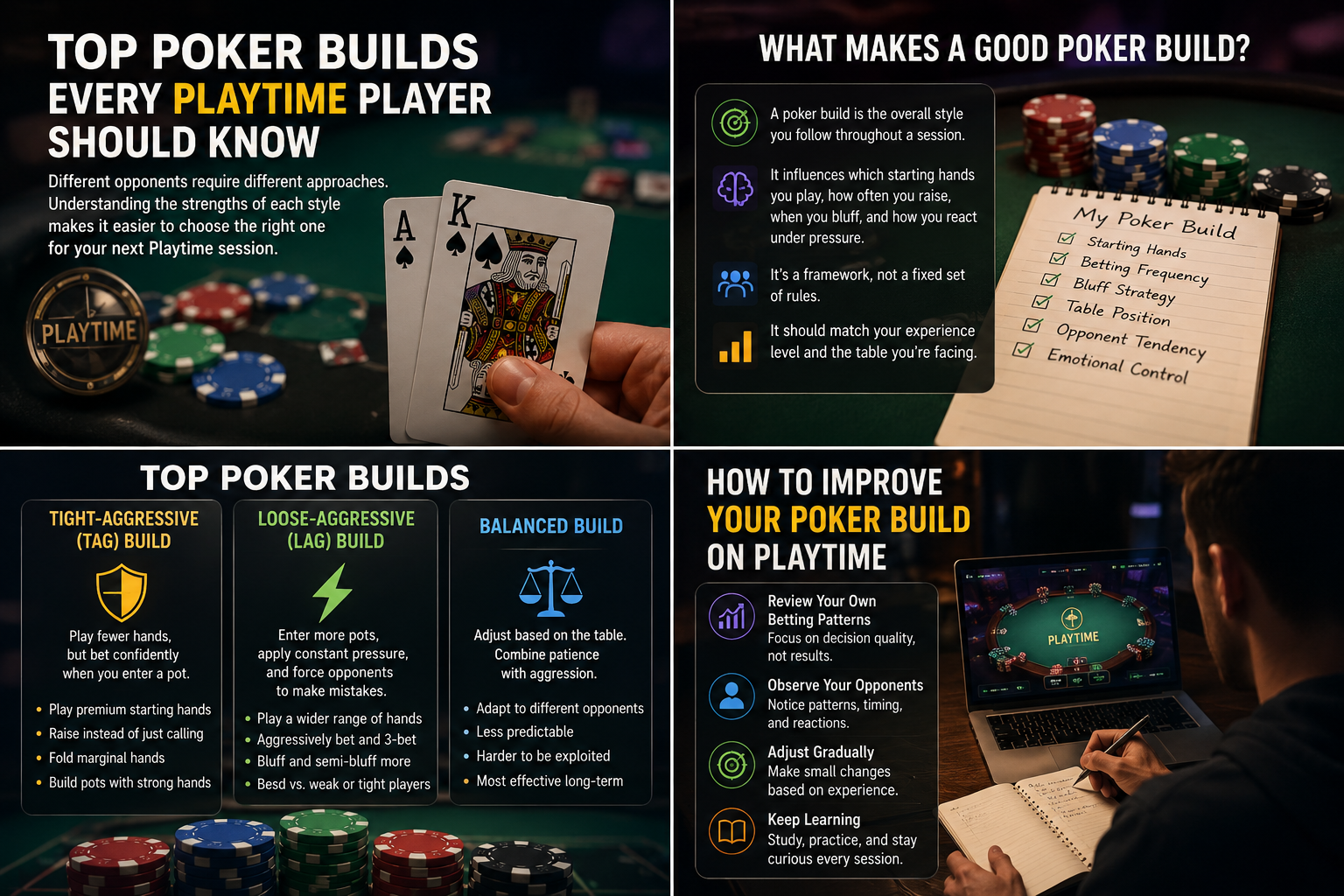
No single poker build dominates every table. Different opponents require different approaches, and understanding the strengths of each style makes it easier to choose the right one for your next PT Gaming session.
Tight-Aggressive (TAG) Build
The Tight-Aggressive build is widely considered the best foundation for most players.
With this approach, you play fewer starting hands but bet confidently once you enter a pot. Instead of chasing weak cards, you wait for stronger opportunities and apply pressure when the odds are in your favor.
A TAG build works well because it balances patience with controlled aggression. Beginners benefit from making fewer difficult decisions, while experienced players can use the same foundation to exploit weaker opponents.
Typical characteristics include:
- Playing premium starting hands more often.
- Raising instead of simply calling.
- Folding marginal hands without hesitation.
- Building pots when holding strong value hands.
Loose-Aggressive (LAG) Build
A Loose-Aggressive build takes almost the opposite approach.
Players enter more pots, apply constant pressure, and frequently challenge opponents before the showdown. The goal is to make others uncomfortable and force mistakes rather than waiting only for premium cards.
While this style can generate larger pots, it also demands excellent hand reading, bankroll discipline, and emotional control. Newer players often lose chips quickly because they imitate the aggression without understanding when to slow down.
LAG works best when you can accurately identify opponents who fold too often or become predictable under pressure.
Balanced Build
A balanced build combines elements of both conservative and aggressive poker.
Instead of following one style every hand, you adjust based on the table. Against cautious opponents, you may increase aggression. Against loose callers, you focus more on value betting with stronger holdings.
This flexibility makes your decisions harder to predict and reduces the chance that experienced opponents can read your betting patterns.
For players who already understand poker fundamentals, a balanced build often becomes the most effective long-term approach.
How to Improve Your Poker Build on PT Gaming
Understanding different poker builds is only the beginning. The real improvement comes from refining your strategy over multiple sessions instead of expecting immediate results. Strong players don’t simply choose a build—they continuously adjust it based on experience, table dynamics, and the opponents they encounter.
Review Your Own Betting Patterns
One of the fastest ways to improve is by reviewing how you play after each session.
Instead of asking, “Did I win?” ask, “Did I make the right decision?”
Those are very different questions.
For example, imagine raising pre-flop with a premium starting hand, getting called, and eventually losing to an unlikely river card. The result may be disappointing, but the decision itself was still correct. On the other hand, winning a large pot after calling several bets with a weak hand doesn’t automatically make the play a good one.
Many experienced poker players evaluate the quality of their decisions rather than the outcome of individual hands.
When reviewing your sessions, pay attention to questions like:
- Did I enter too many pots with weak starting hands?
- Was I betting for value or simply hoping my opponent would fold?
- Did I become more aggressive after losing a big pot?
- Did I fold profitable hands because I became overly cautious?
Keeping simple notes after each session makes it easier to identify recurring habits. Over time, these observations become much more valuable than remembering individual wins or losses.
Adapt to Different Opponents
A poker build should never be completely rigid.
One of the biggest differences between beginners and experienced players is the ability to adjust to different playing styles.
Imagine three different opponents at your PT Gaming table:
- One player folds almost every time someone raises.
- Another calls nearly every bet regardless of hand strength.
- A third player constantly applies pressure with frequent raises.
Using the same strategy against all three is rarely the best option.
Against conservative players, selective bluffs often become more effective because they are more willing to fold. Against players who call almost everything, bluffing loses value, and strong value betting becomes the better choice. Aggressive opponents may require more patience, allowing them to build the pot before you commit with stronger holdings.
The strongest poker builds are flexible enough to respond to changing situations without losing their overall identity.
Avoid Changing Your Strategy After One Bad Session
Every poker player experiences losing sessions.
That alone isn’t evidence that your strategy is broken.
Poker is built around probability rather than certainty. Even excellent decisions can produce short-term losses, while poor decisions sometimes lead to lucky wins.
One habit that often hurts developing players is constantly rebuilding their strategy after every setback.
A player may begin with a disciplined Tight-Aggressive approach, lose several hands in a row, and immediately switch to an overly aggressive style in an attempt to recover chips. The next day, they become excessively cautious because the previous strategy failed.
Instead of improving, they never spend enough time mastering any single approach.
Consistency creates measurable results. Once you’ve played enough sessions using the same core strategy, it becomes much easier to identify what actually needs improvement.
Common Mistakes When Building a Poker Strategy
Even a solid poker build can become ineffective if a few common mistakes creep into your decision-making.
Playing Too Many Starting Hands
New players often believe that seeing more flops creates more opportunities to win. In reality, entering too many pots usually means playing weaker hands in difficult situations.
Good poker builds rely on discipline before the flop as much as skill afterward.
Bluffing Without a Clear Purpose
Bluffing isn’t about appearing fearless.
Successful bluffs work because they tell a believable story based on previous betting actions and your opponent’s tendencies.
Bluffing simply because “it’s time to bluff” usually becomes expensive over the long run.
Ignoring Position
Position influences nearly every decision in poker.
Acting later gives you more information about how other players have entered the pot, making it easier to size bets correctly or avoid unnecessary risks.
Many strong poker builds become significantly more profitable simply because players take advantage of late position more effectively.
Chasing Losses
Trying to recover losses quickly often leads to larger mistakes.
Increasing bet sizes after a bad beat, calling with marginal hands, or abandoning your original strategy usually makes the situation worse.
Experienced players accept that variance is part of poker and continue following their long-term plan.
Copying Professional Players Without Understanding Why
Watching professional poker is an excellent way to learn.
Copying individual plays without understanding the reasoning behind them is much less effective.
Professionals adjust their decisions based on stack sizes, opponent tendencies, tournament structure, and many other variables that may not exist in your own games.
Instead of copying every move, focus on understanding the logic behind each decision.
Final Thoughts: Build a Strategy That Fits Your Game
There isn’t a single poker build that guarantees success for every player or every table.
Some players perform best with a disciplined Tight-Aggressive approach, while others gradually develop a balanced style that adapts to different opponents. The key is finding a strategy you can execute consistently rather than changing your approach every time results fluctuate.
The strongest players treat poker as a long-term decision-making game instead of chasing short-term wins. By reviewing your sessions, learning from mistakes, and making thoughtful adjustments, your poker build becomes more refined with every game.
If you’re ready to put these ideas into practice, PT Gaming provides poker games where you can apply different strategies, recognize betting patterns, and steadily improve your decision-making through real gameplay.
FAQ
What is a poker build?
A poker build is the overall strategy or playing style you use throughout a poker session. It determines how often you enter pots, how aggressively you bet, and how you adapt to different opponents. Rather than relying on luck, a good build helps you make consistent decisions over the long run.
Which poker build is best for beginners?
The Tight-Aggressive (TAG) build is generally the easiest starting point. By playing fewer but stronger hands and betting confidently when you do enter a pot, beginners avoid many costly mistakes while learning core poker strategy.
Can I change my poker build during a session?
Yes, but changes should be based on the table rather than recent results. If your opponents become more aggressive or more passive, adjusting your strategy makes sense. Switching styles simply because you lost a few hands usually leads to poor decisions.
Does table position affect my poker build?
Absolutely. Position is one of the biggest factors in poker strategy. Acting later gives you more information about your opponents, allowing even a conservative build to become more profitable in the right situations.
Can I practice different poker builds on PT Gaming?
Yes. PT Gaming offers poker alongside its casino game library, making it a practical place to experience different playing styles, recognize betting patterns, and gradually refine your own long-term strategy.